How Sentiment Analysis Can Transform Customer Feedback into Actionable Insights

- 6 min read
- 1,215 words
- 8 sections
On this page
As a seller, you know how much effort goes into every order. A single return, a negative review, or a confused customer can affect your sales and reputation. Feedback comes from many places, such as product reviews, return comments, WhatsApp messages, or social media, and it can feel overwhelming to make sense of it all.
Sentiment analysis can change that. It reads customer feedback automatically and shows you what customers like, dislike, or feel neutral about. By understanding these insights, you can reduce returns, improve product listings, and make your customers happier. In this blog, we will guide you step by step on how to use sentiment analysis to grow your business confidently.
What is Sentiment Analysis?
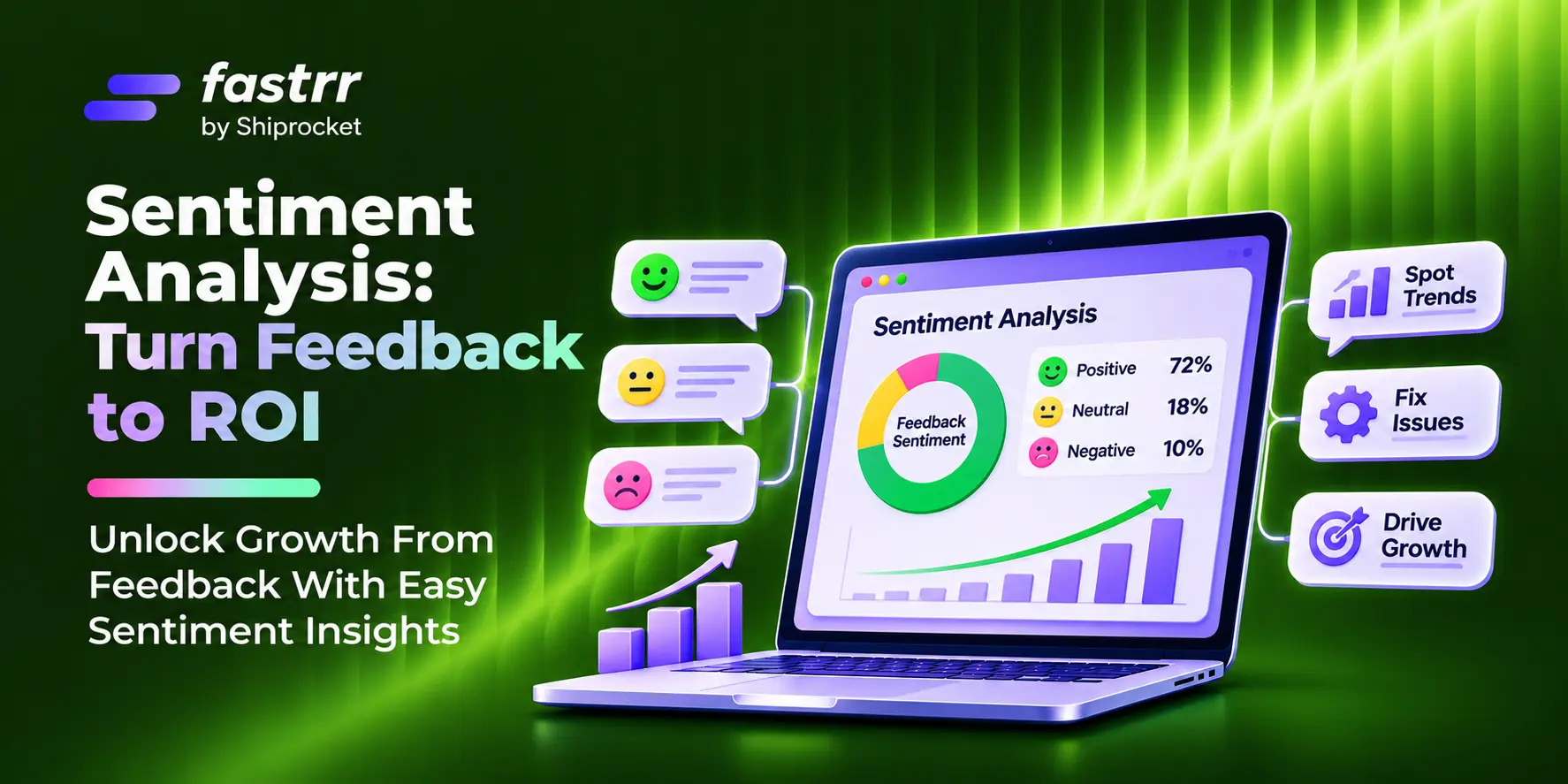
Sentiment analysis is a tool that automatically classifies customer messages, reviews, and feedback as positive, neutral, or negative based on their content. It helps you understand customer opinions at scale without reading every comment.
By analysing feedback, you can quickly spot common reasons for returns, such as issues with fit, quality, or delivery. It also highlights what your customers appreciate, allowing you to act on problems early and reinforce what is working well.
How Does Sentiment Analysis Work in Practice?
For sellers, sentiment analysis follows a simple, practical process you can use without being a data scientist.
- Collect Data
Gather customer reviews, return comments, chat messages, surveys, and social media posts. Tools like fastrr Checkout can help capture structured feedback easily.
- Clean and Prepare
Remove irrelevant text, standardise spellings, and break messages into sentences. Small sellers can manage this using spreadsheets.
- Classify and Group
Label each message as positive, neutral, or negative, and group results by product, courier, or time to spot patterns.
- Act and Measure
Use insights to improve product descriptions, packaging, or delivery. Track results through return rates, ratings, and conversions to see the impact.
Why Should Sellers Use Sentiment Analysis on Customer Feedback?
You may have seen your top reviews and the occasional complaint. Still, sentiment analysis helps you uncover patterns across all feedback so you can take action before small issues become big problems.
Let us see why you should use sentiment analysis:
- Spot Problems Early: Identify recurring issues with fit, quality, or delivery before they escalate.
- Reduce Returns and Complaints: Utilise insights to enhance listings, sizing charts, and packaging, thereby lowering costs and return-to-origin rates.
- Improve Product Pages: Update descriptions and images to set accurate expectations and reduce cart friction.
- Boost Customer Satisfaction: Reinforce what customers like and fix what they dislike, building trust and repeat purchases.
The value of sentiment analysis is clear from the wider market. A 2025 industry report estimates the global sentiment analytics market at USD 5.1 billion in 2024, projected to reach USD 11.4 billion by 2030 with a 14.3% CAGR. The retail segment alone is expected to reach USD 4.2 billion by 2030, underscoring the importance of sentiment analysis in enhancing customer experience and driving sales in e-commerce.
What Types of Sentiment Analysis Can Sellers Apply?
Sellers can utilise sentiment analysis in various ways, depending on their scale and technical capabilities.
- Sentiment from Ratings
Convert star ratings into positive, neutral, or negative sentiment. Average scores by product to see overall satisfaction. Works well if most customers provide ratings.
- Keyword and Lexicon Analysis
Tag feedback using common words like “size,” “fit,” “broken,” or “late.” Simple, low-cost, and easy to interpret.
- Rule-Based Sentiment
Create lists of phrases such as “did not receive” or “wrong size again” to catch urgent issues quickly.
- Machine Learning Classification
Train models on your own labelled feedback. Offers better generalisation than static lists and can adapt to your product language.
- Transformer-Based or Hybrid Systems
Use advanced models like BERT for nuanced, multilingual feedback analysis. They detect emotion, trends, and aspect-based sentiment but require more computing resources.
- Aspect-Based Sentiment Analysis
Focus on specific areas, such as packaging, delivery, product quality, or customer service. This is highly actionable, showing exactly what needs improvement.
Which Sentiment Analysis Tools Can Help Sellers Today?
Sellers can choose sentiment analysis tooLs based on scale, budget, and technical skill:
Small-business and no-code friendly
- MonkeyLearn: Easy text analysis and sentiment classification without coding.
- Brand24: Track social mentions, reviews, and sentiment quickly.
Cloud NLP services
- Google Cloud Natural Language and AWS Comprehend: Scalable APIs with multi-language support, suitable for growing sellers with many products.
Specialist platforms and enterprise-grade
- Lexalytics, Kapiche: Deep review and survey analysis with dashboards and aspect extraction.
Open-source and fast experimentation
- Hugging Face libraries: Run transformer models like DistilBERT for advanced sentiment analysis.
Tips for sellers:
- Small merchants can start with no-code tools to monitor feedback.
- Larger vendors or those with multiple SKUs and languages can use cloud NLP or specialised platforms.
- For local languages or slang, training a small custom model improves accuracy.
How can fastrr Checkout Add Value to Sentiment-Driven Strategies?
fastrr Checkout helps sellers turn customer feedback into actionable insights in two key ways. First, it allows you to collect clean, post-purchase feedback and customizable surveys directly at checkout. Organised feedback ensures your sentiment analysis tool can classify responses accurately, providing faster and more reliable insights.
Second, fastrr Checkout integrates sentiment insights with your fulfillment and shipping operations. If feedback highlights delivery or packaging issues, you can adjust courier preferences, update packaging, or change fulfillment rules quickly to resolve problems.
After delivery, request one or two short feedback questions from customers. Feed responses to your sentiment tool or a simple spreadsheet-based classifier. Monitor key metrics like return rates, delivery complaints, and repeat orders to confirm that your actions are improving the customer experience and boosting sales.
Conclusion
Sentiment analysis turns customer feedback into clear business signals. By understanding what drives praise, complaints, and returns, you can make smarter decisions that directly impact your sales and customer satisfaction. Start small by analysing ratings and simple feedback, then gradually use more advanced approaches like aspect-based analysis or transformer models as your business grows.
Tools like fastrr Checkout make it easier to capture structured feedback and link insights to your shipping, packaging, and fulfillment processes. Acting on these insights quickly helps prevent recurring issues, reduce returns, and improve the overall shopping experience.
Sellers who actively listen to their customers and respond to feedback are better positioned to increase repeat purchases, build trust, and grow their business efficiently, even without a large team or advanced technical expertise.
Frequently asked questions
What is the easiest way for a small seller to begin with sentiment analysis?
Start by exporting reviews and post-purchase comments. Use no-code tools to tag sentiment, prioritise recurring negative feedback, and test small changes to product pages or packaging.
Can sentiment analysis reveal return reasons?
Yes, aspect-based analysis highlights why products are returned, such as issues with sizing, packaging, or courier delays, helping you address these problems before they affect more orders and erode customer trust.
Do I need technical expertise to use sentiment tools?
No, small sellers can start with fastrr or no-code platforms. Technical support or engineers can scale models later for multi-language or complex feedback analysis.
How long will sentiment analysis yield useful patterns?
Patterns usually emerge within a few weeks. Higher-order volumes or frequent feedback accelerate insights, enabling faster improvements to product listings, packaging, and fulfillment.
How does fastrr Checkout assist sentiment-driven improvements?
It collects structured, post-purchase feedback and integrates with fulfillment tools. Insights can trigger immediate fixes in packaging, courier selection, or product descriptions to reduce returns.