Types of Customers in eCommerce: What Every Seller Should Know

- 6 min read
- 1,197 words
- 6 sections
On this page
You have your product line ready, shipping figured out, and your online store live, but are you truly reaching your customers and maximising every sale? In smaller cities, shoppers behave differently. Some chase deals, others expect fast delivery, and many carefully read reviews before making a purchase.
Did you know that around 70.19% of online carts are abandoned in India? That means many potential sales are slipping away. The key to capturing more orders is understanding who your customers are and what drives them. By tailoring your approach to different customer types, you can reduce abandoned carts, encourage repeat purchases, and grow your business steadily.
In this blog, we will explore the main types of customers and show you practical ways to serve them effectively.
What are the Main Types of eCommerce Customers?
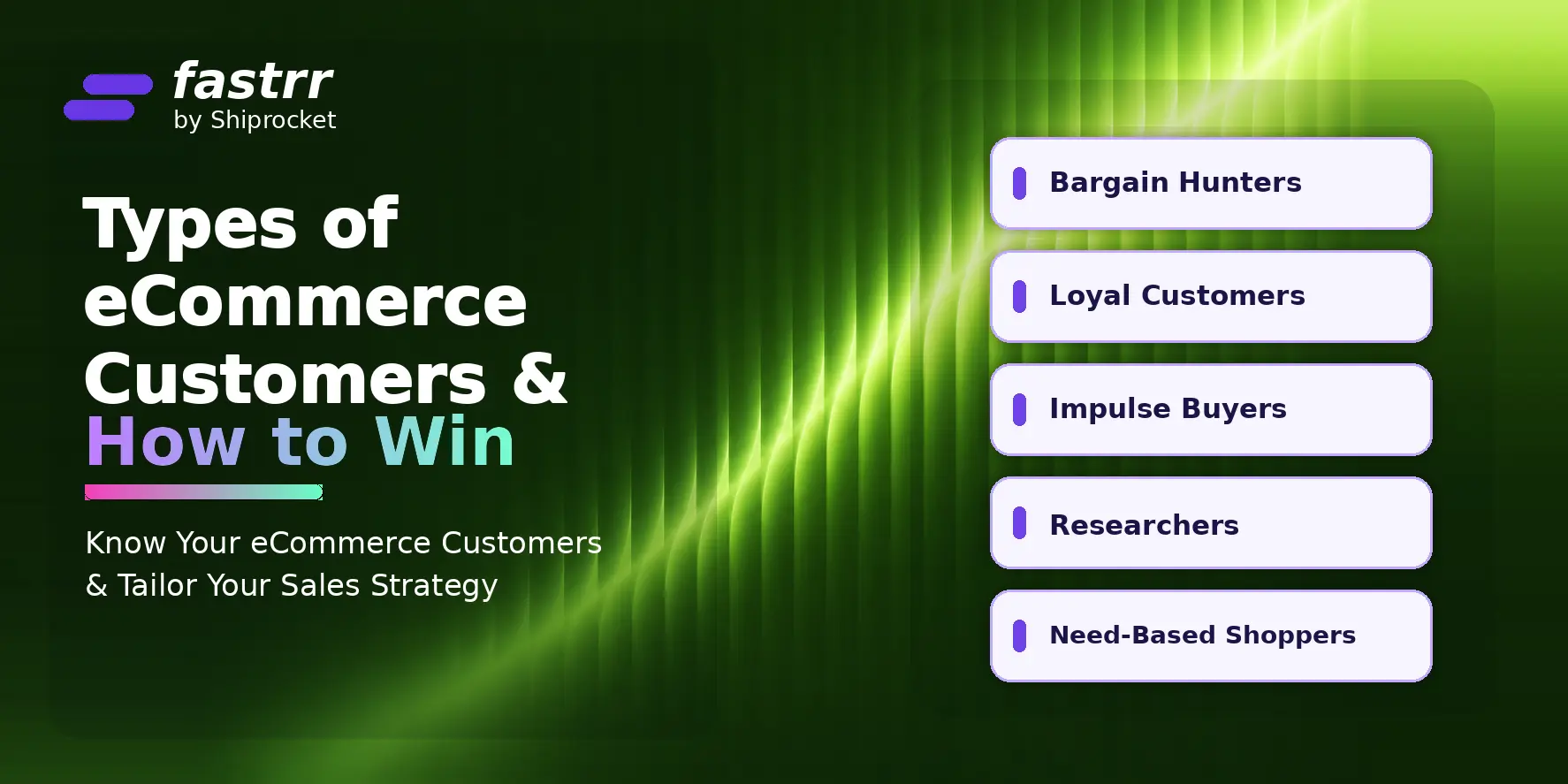
The five main types of eCommerce customers are:
- Value-Maximisers or Bargain Hunters
These customers prioritise price above all. They compare deals, wait for sales, and often prefer cash on delivery. Sellers need to offer clear discounts, visible savings, and trustworthy pricing to convert them. Misleading offers or high COD fees can quickly drive them away.
- Convenience Seekers or Impulse Buyers
These buyers act fast with minimal research. They respond to flash sales and want a simple, frictionless checkout. Slow pages, complicated steps, or missing payment options can stop them from completing a purchase.
- Information Seekers or Researchers
Researchers take their time comparing specs, reading reviews, and checking delivery policies. Their key motivator is trust. Missing details, unclear policies, or hidden costs lead to abandoned carts, even if the price is attractive.
- Loyal or Relationship Buyers
These repeat customers value consistent service, reliability, and quality over minor price differences. Recognising them through loyalty programs or personalised recommendations keeps them coming back. Inconsistent service can quickly break their trust.
- Urgency or Need-Driven Shoppers
These buyers pay for speed and reliability. They respond to express delivery promises and clear tracking. Vague delivery times or unreliable shipping can cause them to abandon their order.
How can Businesses Tailor Strategies for Each Customer Type?
Customer segmentation is of worth only if it results in a doable strategy. Sellers acknowledge segmentation but fail to operationalise it. Below are some strategies that companies can adopt:
- Value-Maximisers
- Show clear, honest pricing and visible discounts.
- Use coupon engines and “compare-before-you-buy” tools.
- Offer prepaid incentives to reduce reliance on COD and minimise RTO risk.
- Convenience Seekers
- Enable one-click or express checkout.
- Ensure mobile-friendly UX and guest checkout options.
- Monitor checkout abandonment and time-to-purchase to remove friction.
- Information Seekers
- Provide detailed specs, images, videos, and reviews.
- Clearly display return and refund policies.
- Offer accurate shipping info and tracking visibility to build trust.
- Loyal Customers
- Recognise them with loyalty programmes and personalised recommendations.
- Give early access to new products.
- Track repeat purchase patterns and NPS to measure loyalty effectiveness.
- Urgency or Need-Driven Shoppers
- Offer express or date-specific delivery and assured tracking.
- Use urgency messaging, such as “Next-day guaranteed,” to motivate purchases.
- Track cart abandonment due to delivery issues to improve reliability.
Why does Identifying Customer Types Lead to Better Business Outcomes?
Here are results backed by data and seller insights:
- Higher Conversion Rates and Lower Cart Abandonment
- Understanding customer behaviour helps remove friction at checkout.
- Clear delivery info, faster checkout, and multiple payment options reduce abandoned carts, especially for researchers and convenience buyers.
- Reduced Return-to-Origin (RTO) and Returns
- Most returns happen due to wrong addresses, unreliable COD, or unrealistic expectations.
- Utilising address verification, filtering high-risk COD orders, and encouraging prepaid payments can significantly reduce RTO.
- Shiprocket Checkout can achieve up to 30% RTO savings with address intelligence and COD control.
- Improved Customer Loyalty and Lifetime Value (CLV)
- Repeat customers return when provided with reliable service, frictionless checkout, and timely communication.
- Proper incentives and personalised experiences increase retention and reduce acquisition cost.
- Better Operating Efficiency and Lower Cost per Order
- Fewer cancellations, returns, and support tickets reduce operational costs.
- Tracking checkout behaviour identifies drop-off points, helping allocate resources effectively and improve ROI.
How can Shiprocket Checkout Support Different Types of eCommerce Customers?
Shiprocket has created Checkout with a range of features that are specifically designed for handling these different types of customers:
- One-Click or Express Checkout
This advantage is best leveraged by convenience buyers and those who shop with urgency. Guest checkout, autofilled addresses, and saved credit card numbers allow companies to streamline checkout by up to 70 percent. Smooth checkout lowers cart abandonment rates directly.
- Address Autofill
Address autofill assists researchers, urgency buyers, as well as convenience shoppers. Shiprocket’s AI database contains over 150 million addresses with 95 percent prefill accuracy. It reduces errors, failed deliveries, and return-to-origin scenarios.
- COD vs Prepaid Optimisation
Value-maximisers such as cash on delivery, but COD incurs return risks. Urgency-sensitive customers also demand dependability. Firms can levy COD charges, restrict COD by geography, and provide incentives for prepaid payment. Shiprocket helps to filter high-risk COD addresses and curb repeat COD orders to reduce RTO.
- Multiple Payment Modes and Secure Login
Mobile researchers, convenience buyers, and repeat shoppers rely on flexible and secure payment experiences. Offering UPI, cards, wallets, and net banking on a mobile-friendly, secure checkout page reduces drop-offs and resonates with varied tastes.
- Discount Engine and Personalised Offers
Value-maximisers, repeat shoppers, and impulse buyers respond well to certain offers. Shiprocket Checkout provides over 10,000 discount configurations, including flash sales, coupons, and buy-one-get-one.
Conclusion
Understanding types of customers is not just theory; it directly impacts your sales, repeat business, and operational efficiency. By identifying whether your buyers are value-maximisers, information seekers, convenience buyers, loyal customers, or urgency shoppers, you can tailor your approach to meet their expectations.
The key takeaway is this: small changes in how you present pricing, offer checkout options, guarantee delivery, or personalise incentives can dramatically increase conversions and loyalty. Tools like Shiprocket Checkout make it easy to implement these strategies, helping you reduce abandoned carts, cut RTOs, and encourage repeat purchases, even if your business operates in smaller cities or emerging markets.
By knowing your customers and acting on these insights, you’re not just selling a product, you’re building a reliable, scalable business that grows consistently.
Frequently asked questions
How do I identify the dominant customer types in my store?
Use analytics to track payment preferences, purchase frequency, browsing behaviour, and cart abandonment points. Surveys and feedback help segment customers into actionable behavioural groups.
What are the trade-offs between COD and prepaid orders?
COD builds trust and drives orders, but increases returns, RTO, and non-payment risk. Prepaid reduces operational costs and errors but may require discounts or incentives to maintain sales volume.
How reliable are Ground Estimated Delivery Dates (EDDs) for remote areas?
EDDs vary by courier network and infrastructure. Tools like Shiprocket Promise use AI and historical data to provide realistic estimates, though weather or local delays can affect accuracy.
Can frequent discounts harm my profitability or brand?
Excessive discounts encourage customers to wait for offers, which can reduce steady sales and margins. Use targeted, time-limited promotions and track effects on retention and average order value.
How can I measure if checkout improvements actually boost sales?
Run A/B tests on one variable at a time, monitor conversion rates, cart abandonment, payment choices, and repeat purchase patterns, and gather direct customer feedback.