Neuromarketing: The Future of Data-Driven and Emotion-Based Marketing

- 6 min read
- 1,319 words
- 7 sections
On this page
Running an online business outside big cities comes with its own set of challenges. Every ad, product description, or website update feels like a significant investment, yet customers sometimes leave without making a purchase. The reason isn’t your effort; traditional marketing often misses a crucial factor: most buying decisions happen in the subconscious mind long before logic takes over.
This is where Neuromarketing can help. By understanding how customers emotionally respond to colours, layouts, words, and checkout flows, you can uncover why shoppers abandon carts or click “buy.” Research shows that nearly 95 per cent of decisions are driven by emotions rather than logic.
By applying these insights, you can increase sales, reduce cart abandonment, and make smarter marketing decisions, ensuring every effort counts and every customer interaction works in your favour.
What is Neuromarketing, and How Does it Work?
Neuromarketing studies how the brain and emotions influence buying decisions. Instead of guesswork or surveys, it records how real people really feel when they see ads, websites, or products. The point is to find out what gets people’s attention, earns their trust, and makes them want to buy something.
It works by observing physical and emotional reactions, such as:
- Eye-tracking: Sees what customers notice first on a website, product page, or packaging.
- Facial expressions: Detects emotions like surprise, confusion, or excitement while viewing content.
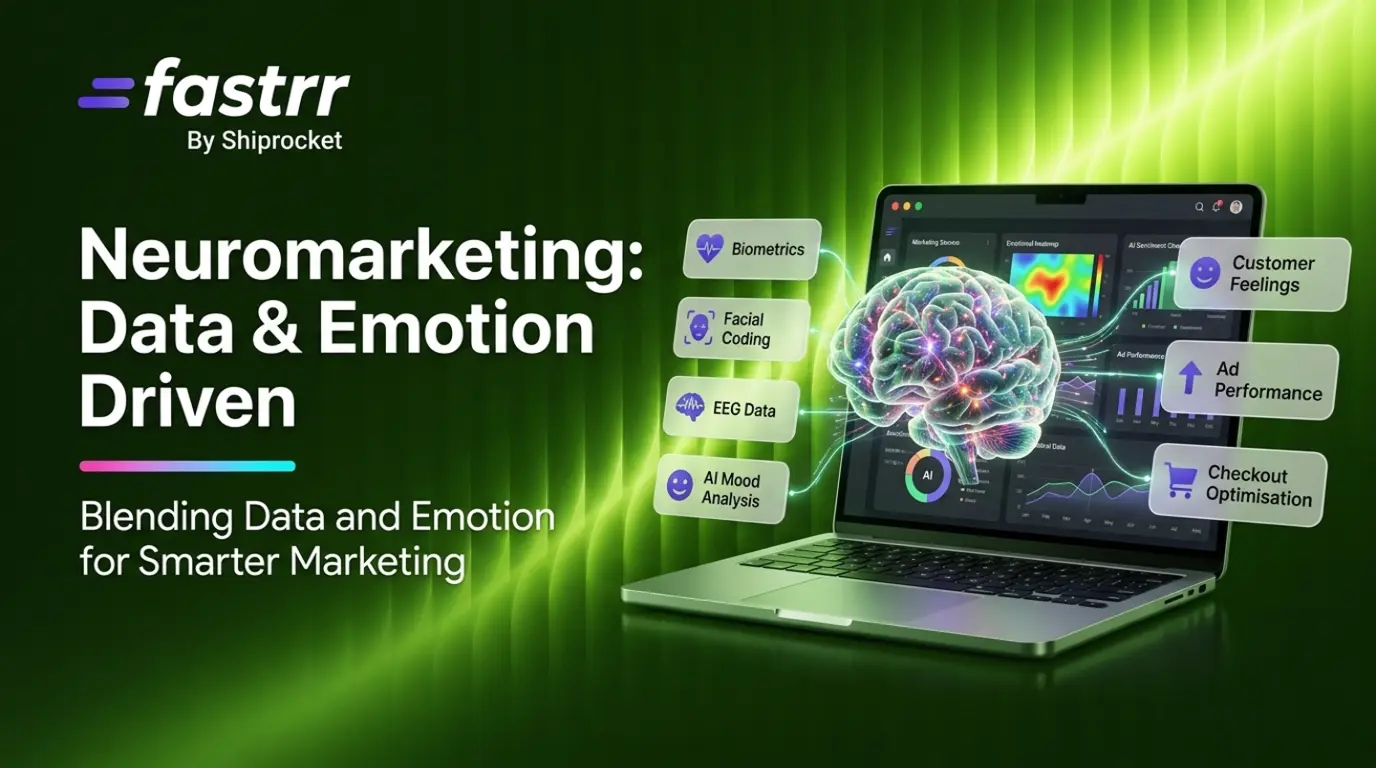
- EEG (brainwave scans): Identifies attention levels and engagement.
For sellers, this means understanding why customers make certain choices, not just what they buy. These insights help create better campaigns, product pages, and checkout experiences that increase conversions and reduce cart abandonment.
What are the Key Benefits and Applications of Neuromarketing Today?
Neuro marketing isn’t just a trendy term; it helps businesses address real issues, such as low conversions, cart abandonment, or ads that fail to connect. When sellers use both data and emotional insights together, they can make better decisions that have a direct effect on sales.
- Better Ad Performance
Understand which emotions capture attention. Ads that trigger feelings are more likely to build loyalty than purely logical ads.
- Improved Product Packaging and Design
Eye-tracking and visual analysis reveal what customers notice first, helping you optimise packaging, layouts, and product pages to drive clicks.
- Reduced Cart Abandonment
Identify triggers like trust issues, confusing layouts, or limited payment options. Fixing these increases buyer confidence and keeps carts from being abandoned.
- Deeper Customer Insights
Know not just what sells, but why. This enables more relevant campaigns and builds long-term customer trust.
How does Neuromarketing Help in Shaping Smarter Product Development Decisions?
Many companies put out products based on guesses or market trends, only to find that customers don’t react the way they thought they would. Neuromarketing changes this by letting you know how customers really feel about a product before it even hits the market.
Here’s how it helps in more innovative product development:
- Testing prototypes: Sellers can see how buyers react to a new design, feature, or packaging before scaling production. It observes the emotional factor.
- Better usability: Neuromarketing highlights friction points in apps, websites, and even product handling so that you can fix them easily.
- Making data-driven choices: Instead of guessing between product designs, you can choose the one that is meant to trigger positive reactions.
- Building trust faster: Insights on colour, placement, and messaging ensure your product connects with the right emotions from day one.
As a result, eCommerce sellers will make fewer mistakes that cost a lot of money, find the right product-market fit faster, and have faith in each new launch. This is mainly because both human data and psychological research back it.
What are the Most Effective Neuromarketing Techniques in 2025?
Neuromarketing is now more accessible and affordable. Businesses of all sizes use the latest technology to keep growing.
Here are a few neuromarketing techniques that stand out as especially useful for sellers in 2025:
- Eye-tracking
This particular method tells you what a customer looks at first on a website, ad, or product page. It allows sellers to place discount buttons, call-to-action buttons, or images of their products in areas where they will receive the most attention.
- Facial coding
Businesses can determine whether viewers are happy, confused, or angry simply by observing their microexpressions. This helps to make ads or product photos better before they are released to the market.
- EEG (brainwave analysis)
Electroencephalography is used to check if a person is interested, bored, or distracted just by looking at how their brain is working. This technique is used to test ads and product designs. It helps make sure that people are interested in the products.
- Biometrics and sentiment tracking
Heart rate, skin response, and even voice tone can now be tracked by tools to help us understand how people are feeling. For example, these insights show whether buyers are trusting, excited, or hesitant.
- AI-powered predictive tools
AI has been extremely useful in Neuromarketing. For instance, sentiment analysis powered by AI can help identify hidden emotional patterns in thousands of customer reviews or social media comments, which in turn helps create better campaigns.
For sellers, these techniques mean you no longer have to rely only on trial and error. You can actually see in real time how customers connect with a brand or product and make adjustments before losing sales.
How does fastrr Checkout Improve Customer Conversion for Businesses?
Neuromarketing proves that emotions like trust, simplicity, and confidence strongly influence buying behaviour. No matter how great a product is, a poor checkout experience can spoil all your marketing efforts. fastrr Checkout addresses this by creating a smooth, secure, and easy checkout experience.
This is how it helps convert visitors into paying customers:
- Seamless Experience: A fast and quick checkout flow that reduces hesitation and improves buyer confidence.
- Multiple Payment Options: By offering wallets, UPI, cards, and net banking, you make sure customers do not leave because their preferred method isn’t available.
- Signs of Trust: Brands that can be changed, safe sites, and prices that are easy to understand all help to build confidence at the end of the buying process.
- Lower Cart Abandonment: Products created with buyers’ psychology in mind make it easier for buyers to complete their purchases and lower the chance that they will abandon their carts.
- Mobile-Friendly Design: Since a lot of people buy things on their phones, Shiprocketx payment makes sure that mobile payment works smoothly and efficiently.
Conclusion
Neuromarketing is more than a strategy; it’s a way to understand your customers’ emotions and the underlying decisions that drive them. By combining emotional insights with data, you can reduce cart abandonment, improve product launches, and create marketing that truly connects.
The real opportunity lies in the checkout experience, where most sales are won or lost. A simple, secure, and trustworthy checkout builds confidence and encourages repeat purchases.
Use tools like fastrr Checkout to apply these principles in your business. Start optimising your checkout today to turn more visitors into loyal, paying customers and maximise every sale.
Frequently asked questions
Is Neuromarketing expensive for small businesses?
Not necessarily. Affordable tools like heatmaps, AI sentiment analysis, and mobile testing apps allow small sellers to access insights previously limited to large brands.
Can Neuromarketing really reduce cart abandonment?
Yes, even small adjustments, like optimising button placement, simplifying forms, or showing trust badges, can significantly lower drop-offs and increase completed purchases.
How quickly can sellers see results with Neuromarketing?
Some improvements, like ad engagement or checkout completion rates, can appear within weeks, while deeper product or campaign optimisations may take a few months to impact sales fully.
Do I need technical knowledge to apply Neuromarketing?
No, sellers can start with easy-to-use tools like heatmaps, A/B testing, and analytics dashboards, all without programming skills, and apply insights to websites, ads, and product pages.
How does fastrr Checkout apply neuromarketing principles?
It improves conversions by optimising payment options, reducing checkout steps, and adding trust signals, helping customers feel confident, safe, and in control during every transaction.